Four-clawed tortoise
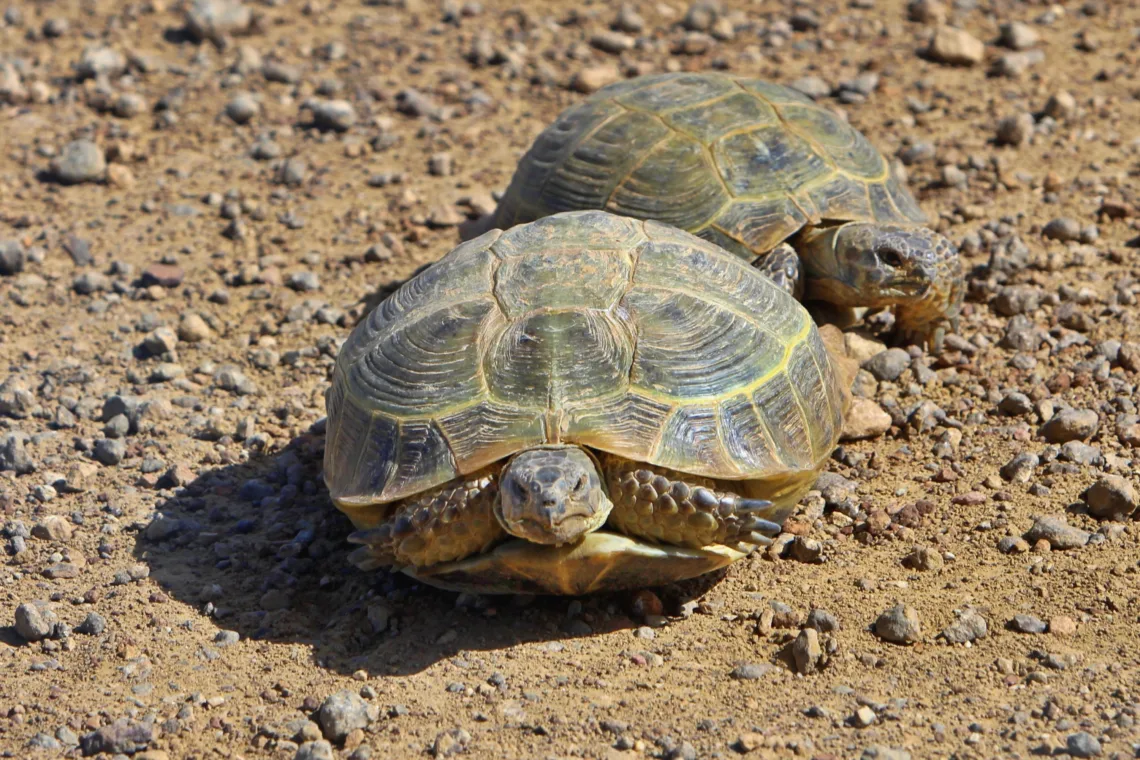
In the vast steppe of southern Kazakhstan, not far from the legendary Baikonur Cosmodrome, lives a small but remarkable reptile: the four-clawed tortoise. Known scientifically as Testudo horsfieldii, it is also called the Central Asian tortoise, Russian tortoise, or steppe tortoise.
A tortoise of the steppe
The four-clawed tortoise is perfectly adapted to the harsh, dry landscapes that surround Baikonur. These regions are characterized by extreme temperatures—scorching summers and freezing winters—and sparse vegetation. The tortoise thrives here by living a mostly underground life. It digs deep burrows, sometimes up to two meters long, to escape heat and cold, emerging mainly at dawn and dusk to feed.
Unlike most tortoises, this species has only four claws on its front feet—hence its name. It is relatively small, usually reaching about 20–30 cm in length, with a rounded, slightly flattened shell that blends well into the dusty steppe environment.
Life near a gateway to space
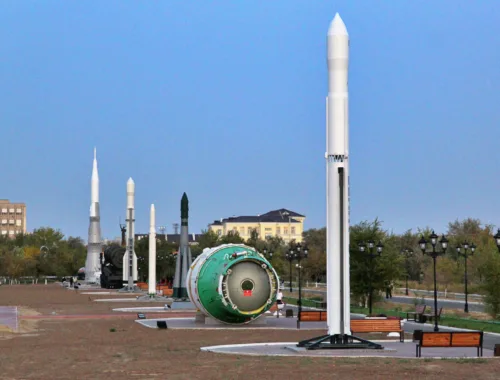
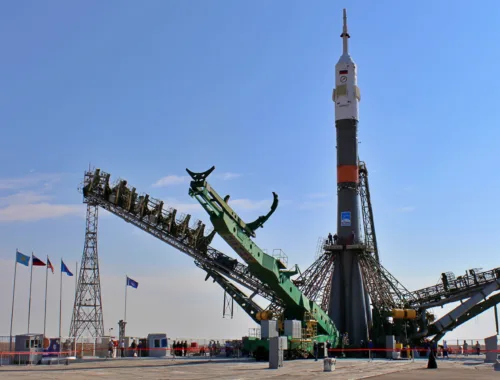
The presence of this ancient reptile near Baikonur creates a fascinating contrast: one of Earth’s oldest life forms living beside one of humanity’s most advanced technological sites. While rockets launch toward the stars, the tortoise continues its slow, steady existence, much as it has for thousands of years.
Interestingly, this species even has a connection to space exploration. In 1968, two tortoises of this kind became the first animals to travel around the Moon aboard a Soviet spacecraft.
Survival challenges
Despite its resilience, the four-clawed tortoise is considered vulnerable. Human activities—such as habitat destruction, agriculture, and illegal collection—have significantly reduced its population across Central Asia.
Recognizing this threat, Kazakhstan has introduced strict protections, including a nationwide ban on capturing or using these tortoises, aimed at preserving the species for future generations.
A symbol of endurance
In the shadow of rockets and launchpads, the four-clawed tortoise remains a quiet symbol of endurance. It represents the deep natural history of the Kazakh steppe—slow, resilient, and enduring—reminding us that even in places defined by cutting-edge technology, ancient life still persists.